Crimson Music Case Study
A personal music experience, built around discovery, your library, and the next track.
Case Study
Crimson Music brings music discovery, playback, and a personal library into one independent Audius client. Built for iOS, Android, and web, it connects directly to a listener’s Audius account and gives the music a distinct visual home.
The Challenge
A music app has to make room for two different habits: finding something new and returning to something familiar. Crimson brings both into the same flow, from a discovery feed to saved favorites, followed artists, and playlists.
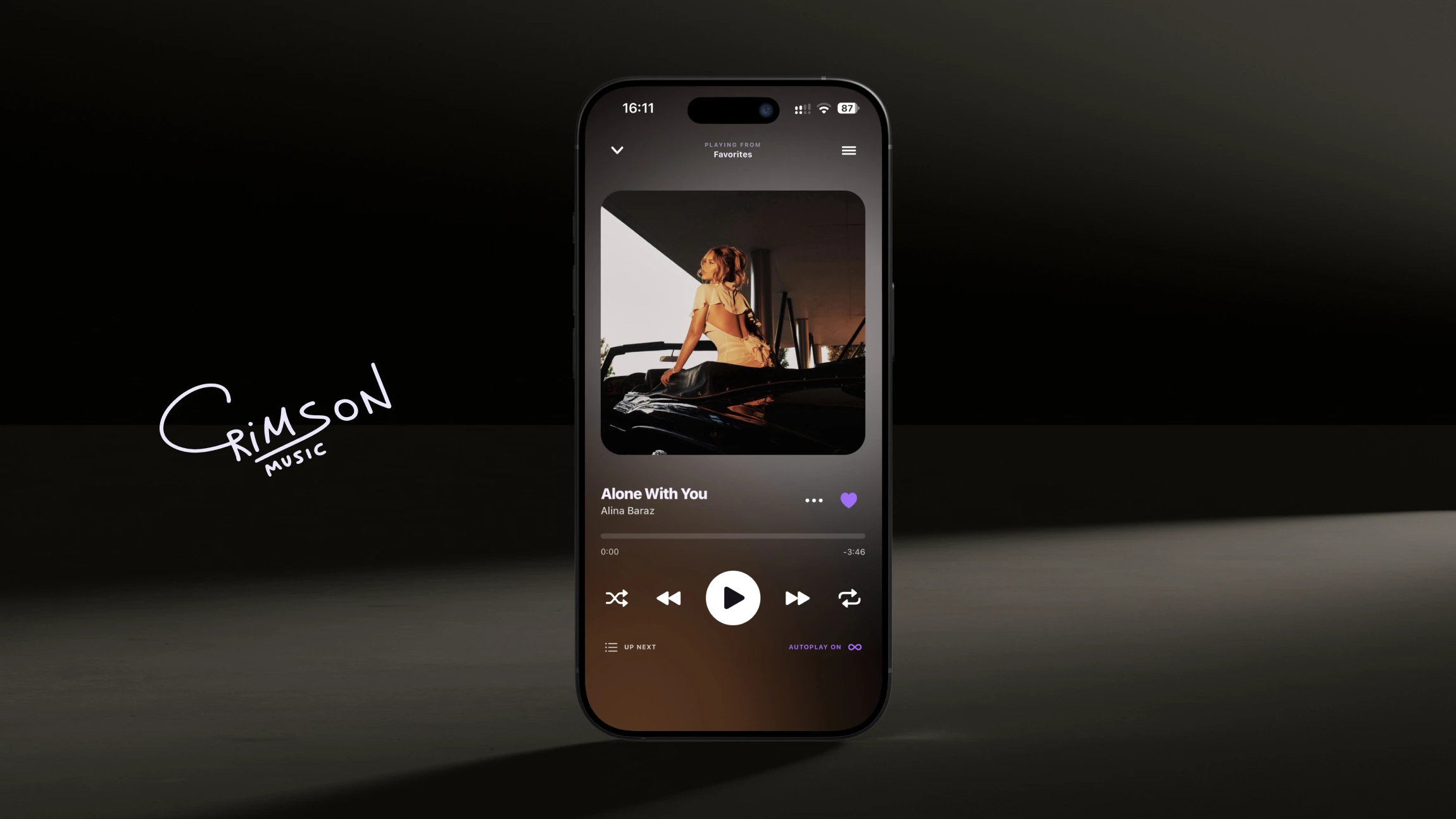
Playback also needs to stay within reach while browsing. The interface keeps the current track close, with a mini player that opens into an artwork-led listening view.
The Experience
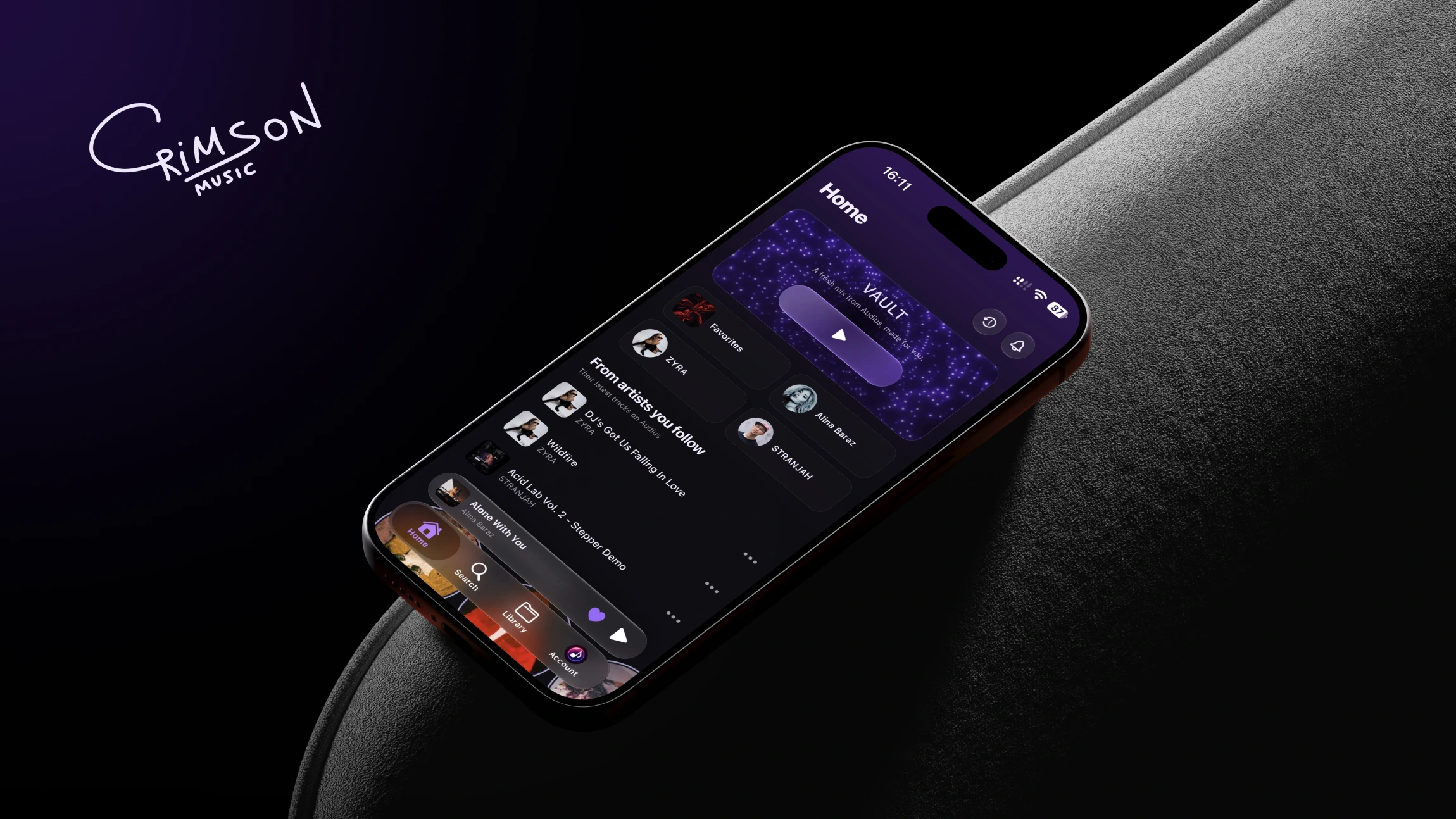
Discovery with a personal starting point. Recent listening, releases from followed artists, and Vault mood mixes give listeners several ways to find their next track.
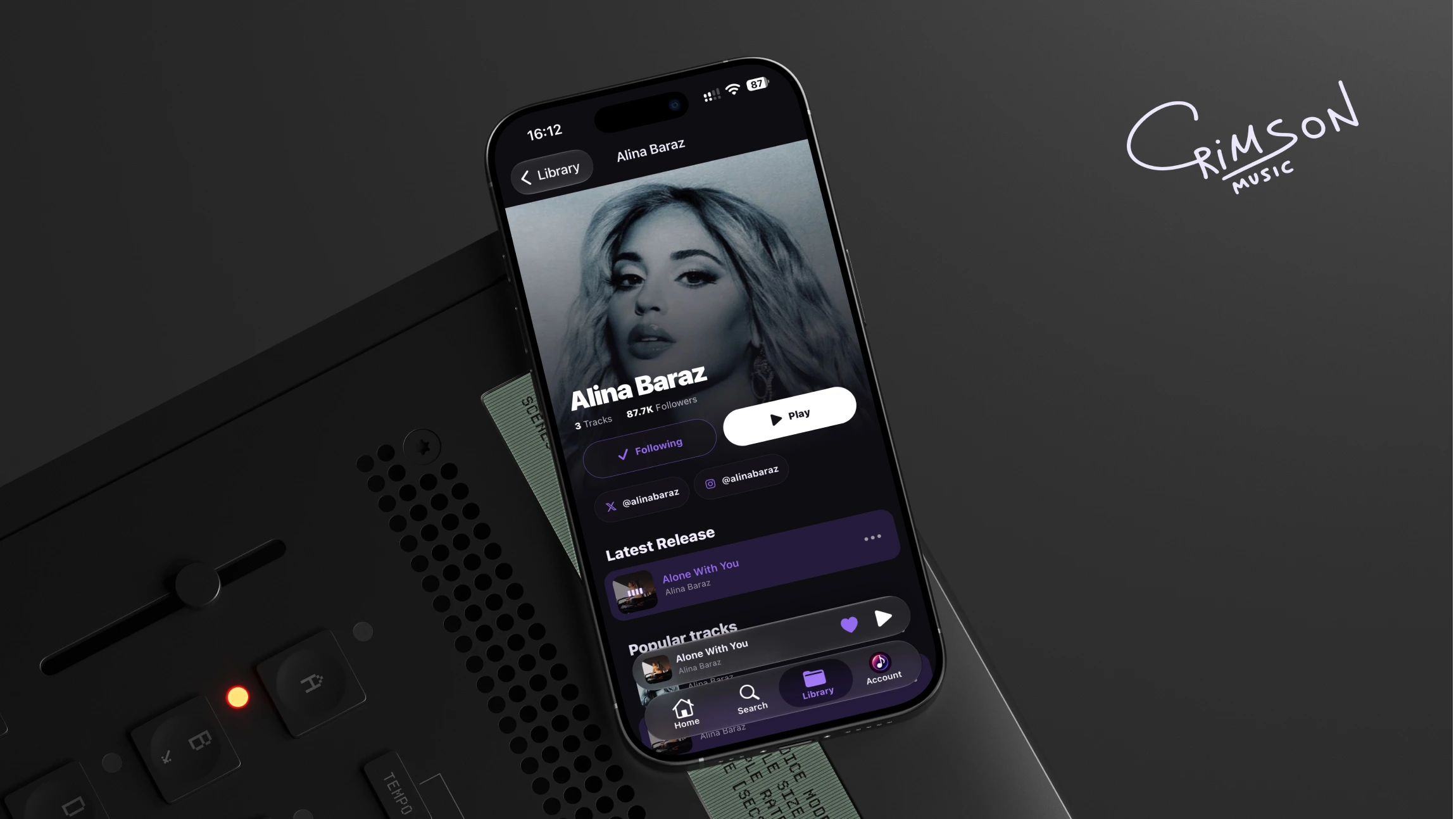
A library that stays connected. Favorites, follows, and playlists belong to the listener’s Audius account. Search brings tracks, artists, and playlists together with filters for each type.
Control over the listening session. An editable queue, mobile downloads, and a persistent desktop player support different ways of listening, with Data Saver and motion settings available when needed.
Design Direction
Deep backgrounds and purple accents give Crimson its identity while leaving album artwork and artist photography in the foreground. Favorites, active navigation, and key controls share that purple accent, making the interface feel connected from screen to screen.
The glass treatment adapts to the platform: Liquid Glass on iPhone, and translucent frosted surfaces on Android and web. The home feed, full player, and artist pages keep a consistent visual language across those differences.
The Result
Crimson Music combines a recognizable interface with discovery, playback, and library tools in an open-source app. Audius provides the catalog, streams, and account system; Crimson shapes how listeners explore and enjoy them.
The source is available on GitHub, including setup instructions and platform support notes for anyone who wants to explore the implementation or build it themselves.